Order puto in Biñan, Laguna, and you get a round cake that the Experience Biñan tourism site says is as big as a pizza, topped with grated cheese, salted egg and condensed milk. Order puto in Calasiao, Pangasinan, and you get small white cups sold by the kilo. Both are steamed rice batter. They are not really the same food, and that is the useful thing to know about kakanin. The names travel all over the country, but the rice, the leaf, the vessel and the fire change from town to town.
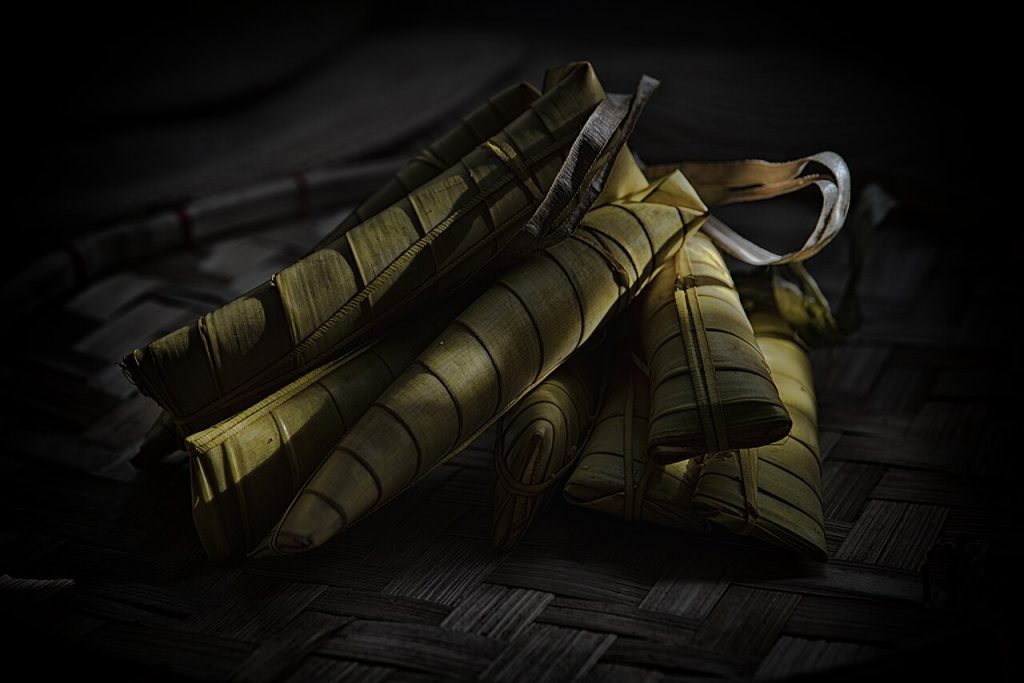
What follows is a short field guide to three of the most common names: puto, bibingka and suman. It focuses on the versions that have a clear home and a documented method.
Puto: one name, two very different kitchens
Puto Biñan has a founder story. Experience Biñan credits Petronila “Nila” Samaniego, a housewife whose husband would not let her work, and who filled her time by experimenting with puto. The columnist Lydia Castillo, writing in The Philippine Star in 2015, tells the same story and says the brand was then about 90 years old and still run by the Endriga family, her heirs.
Both sources describe the same steaming method. The batter goes into a lansungan, or steamer, with katsa (muslin cloth), and cooks in an oven fired with ipa, or rice husk. The toppings go on a few minutes before the cake finishes. The sources do not agree on what makes it rise. Experience Biñan lists rice flour, brown sugar, baking powder and water. Castillo describes the original as “flour, sugar and lye.” The selling method shaped the snack too. According to Experience Biñan, vendors sold it by the box at the old Biñan station of the Philippine National Railways, climbing into the coaches to sell to passengers as merienda or pasalubong.
Calasiao goes the other way: no cheese, no salted egg, and the flavor comes from fermentation. Gabriel Cardinoza, reporting in November 2023, laid out the process as Mayor Kevin Roy Macanlalay described it. Makers mix four rice varieties in equal parts and soak them for an hour. A stone grinder turns the rice into liquid. The batter ferments in earthen jars for at least three hours. Sugar goes in, the batter is poured into small cup-shaped metal molds, and the cups steam for 30 minutes. “It’s the banga (earthen jars) that gives the puto its soft and silky texture,” the mayor said. Production is concentrated in the villages of Dinalaoan, Lumbang, Ambuetel and Nalsian.
The fermentation time is worth flagging. Cardinoza’s “at least three hours” is far shorter than the multi-day fermentation repeated on many websites. The longer figure did not come up in any primary source found for this piece. The trade is still changing. Cardinoza reported in December 2023 that town officials wanted to export the product more than 50 years after it “hit the sidewalks.” In 2025, GMA Regional TV covered a black puto for Undas made by Rudy dela Cruz, who has been making Calasiao puto for more than four decades.
Bibingka and the question of fire
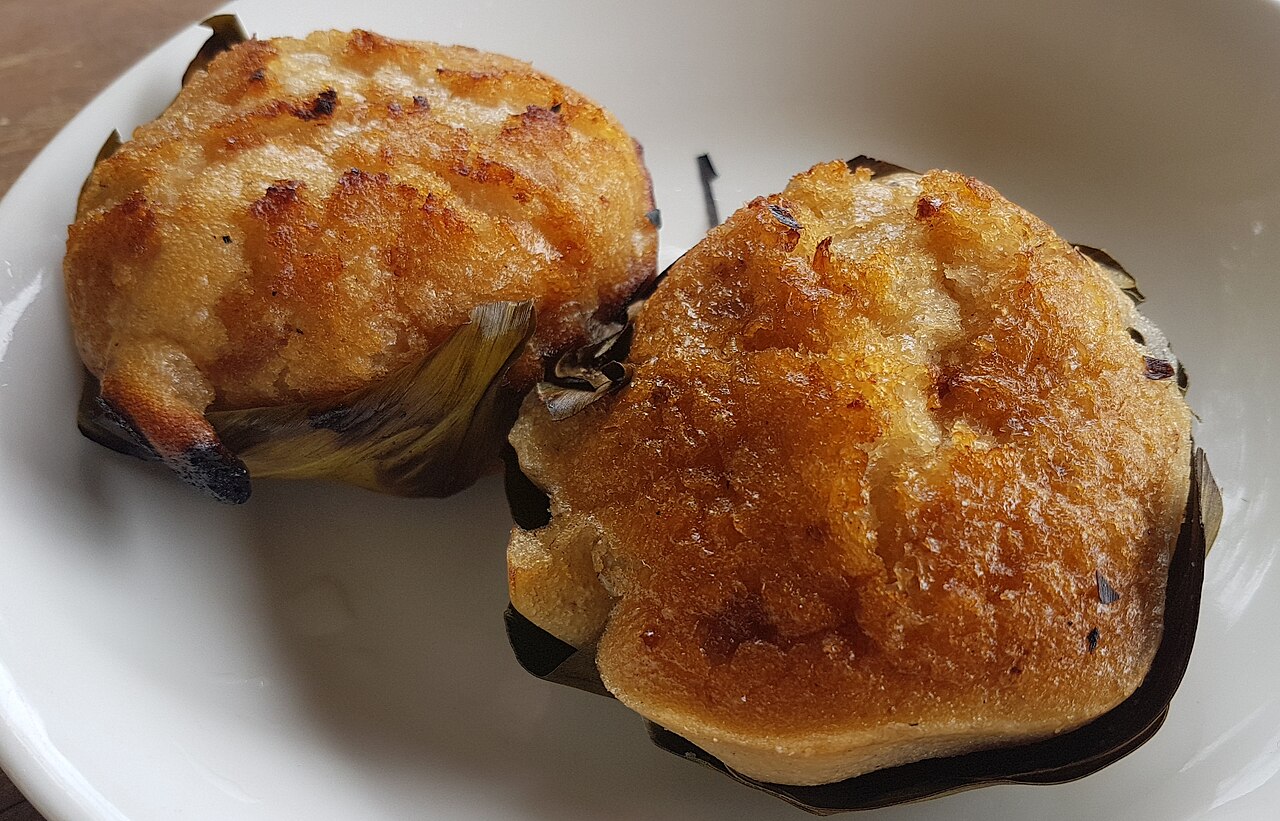
Bibingka is defined by how it cooks. Maida Pineda, writing for SBS Food in 2021, describes the Christmas-season bibingka galapong sold outside churches during Simbang Gabi. It is baked in a clay pot with coals both above and below, which turns the pot into an oven. The cake is topped with salted egg, white carabao-milk cheese, butter and grated coconut.
Mandaue City in Cebu keeps the clay and the coals but changes the rice. A 2016 report in The Freeman says the “Bibingka sa Mandawe” uses rice that is pounded rather than ground. The city’s bibingkeras explain that grinding generates heat, which partly cooks the grain and makes the cake spoil faster. Pounding lets the grain “breathe” between strikes. The batter rises with yeast or tuba (coconut wine). It bakes in clay molds called urnohan with burning coal on top and underneath, and it comes out topped with strips of young coconut. The report says it keeps for three to five days without refrigeration.
In the north, the Vigan version from Ilocos Sur swaps ordinary rice for glutinous rice. The recipe site Pepper.ph describes “royal bibingka” as made with glutinous rice flour, which gives it a bouncier, mochi-like chew. After baking it is brushed with butter and topped with grated cheese and sugar. The name and the origin of the “royal” label were not documented in any source found for this article.
Suman, or whatever the leaf decides
Suman is where regional difference is easiest to see, because the wrapper is part of the recipe. Elmer I. Nocheseda, in his essay “In Praise of Suman Past,” gives a useful rule of thumb. Suman sa antala is wrapped in heat-wilted banana leaves and steamed for 30 minutes to an hour. Suman sa ibos is glutinous rice soaked in coconut milk, packed loosely into palm leaves and boiled for about two hours, then eaten with sugar. Suman sa lihiya is rice treated with lye, wrapped in banana leaves and boiled for two hours, and served with grated coconut, brown sugar or latik.
The same essay maps the wrappers. Banana leaf and young coconut leaf (lukay in Cebuano) are the most common. Cooks also use anahaw, nipa, buli, fresh bamboo and even empty coconut shells. Some leaves are strictly local, such as arrekek in Cagayan and hagikhik in Leyte. Antipolo coils its suman sa ibus horizontally and ties it with palm strips. In Zamboanga, Nocheseda writes, suman comes in banana-leaf cones and is eaten like ice cream. In Laoag, tupig is flavored with molasses and grated coconut and cooked buried under burning rice chaff for a smoky taste.
Eastern Visayas brings chocolate into it. The Freeman described Tacloban’s moron in 2017 as a sticky rice cake made with glutinous rice, coconut milk, evaporated milk, sugar, vanilla and cocoa, wrapped in banana leaf and sold at bus terminals and piers. A 2003 Philippine Star report shows how a provincial snack scales up. The Department of Science and Technology helped Kookai’s Delicacies of Tacloban introduce blast freezing so moron could reach Luzon and Canada, and it kept the banana-leaf wrap.
Then there is the suman that skips rice altogether. Budbud kabog uses millet. The Cebu-based food blog Market Manila went looking for kabog in 2016 and found it growing on hillsides near Catmon in northern Cebu. Replying to a reader, the blog called it “more of an agricultural crop in Negros.” The post also warned that millet is getting harder to find “because so few people still cook with it,” so fewer farmers plant it.
How to read a kakanin label
When a pasalubong stall sells “puto” or “suman” with a town name attached, the name usually points to a method, not just a place. Calasiao means fermented batter and clay jars. Biñan means a big, topped, husk-fired cake. Mandaue means pounded rice and coal on both sides of the mold. Sa lihiya means lye. Sa ibos means palm leaf and a long boil. Nocheseda’s essay makes a sharper point: much of this has never been written in recipe books. It has been learned by cooking alongside a lola, and if the grandchild does not remember, he writes, much of it goes with her. That is why towns that still put the method in front of buyers, like Calasiao with its stone grinders and banga, deserve a stop.
Note: Several widely repeated details could not be confirmed against a primary source and were left out or flagged. These include the founding year of puto Calasiao, its multi-day fermentation time, the origin of Vigan’s “royal” bibingka, and the exact ingredients of the original Biñan recipe, where the two sources consulted disagree. The essay by Elmer I. Nocheseda was read in a reposted copy whose original publication date is not given. Prices in older reports are left out because they are likely out of date.
Sources
- Puto Biñan — Experience Biñan, undated
- Biñan pospas and puto — Lydia Castillo, The Philippine Star (Starweek), December 5, 2015
- Calasiao ‘puto’ top choice of town’s tourists — Gabriel L. Cardinoza, Northern Philippine Times, November 12, 2023
- Makers of Calasiao ‘puto’ seek to export products — Gabriel L. Cardinoza, The Manila Times, December 15, 2023
- Calasiao’s ‘legendary puto maker’ introduces black puto for Undas — CJ Torida, GMA Regional TV, October 31, 2025
- It’s worth waking up at 4:30am for bibingka — Maida Pineda, SBS Food, December 15, 2021
- Local yummies: Bibingka sa Mandawe — The Freeman, January 16, 2016
- Vigan Royal Bibingka Cupcakes — Pepper.ph, undated
- In Praise Of Suman Past — Elmer I. Nocheseda (reposted on Tagalog-Dictionary.com), undated
- Chocolate Moron — The Freeman, January 6, 2017
- RP can produce globally competitive chocolate — The Philippine Star, September 28, 2003
- Hillsides Brimming with Kabog… — Market Manila, August 3, 2016