Long before anyone called Siquijor the “mystic island,” the Spanish called it Isla del Fuego. The name came from the swarms of fireflies they saw there, not from any sorcery, according to a 2019 Inquirer travel feature by Leo Udtohan. The same piece gives the island’s older name, Katugasan, after the tugas or molave tree that once grew all over it. It is a useful place to start. Most of what draws people to Siquijor has a plainer, and more interesting, explanation than the stories suggest.
Siquijor is the third smallest province in the country, with six towns: Siquijor, the capital, plus Larena, Enrique Villanueva, Maria, Lazi and San Juan. Its reputation is out of all proportion to its size. Here is what is actually there.
Seven Fridays on Mount Bandilaan
The island’s healers are called mananambal, and the most important dates on their calendar fall in Lent. In 2017 the Inquirer followed Bienvenido Ponce, then a 58-year-old healer from San Antonio in Siquijor town, on what his family calls tang-alap. This is the gathering of herbs on seven consecutive Fridays, beginning after Ash Wednesday and ending on Good Friday and Black Saturday. The Ponces walked almost three kilometers each trip, heading east, then west, then north, then south. On the sixth Friday they went to the sea for sea urchins, starfish and puffer fish. Bienvenido said they had to collect at least 3,000 kinds of medicinal plants. That is his family’s count, not a botanical survey.
The survey figure is smaller and better documented. From 2014 to 2019, researchers from Siquijor State College, Negros Oriental State University, the University of the Philippines Manila and the Department of Science and Technology documented the island’s healing practices, Mongabay reported in February 2024. They identified up to 218 plant species used by folk healers, most of them found on Mount Bandilaan. Bandilaan is the island’s highest point at 557 meters, and its 271-hectare forest is now protected as Mount Bandilaan National Park.
The brewing happens at the end of Holy Week. Healers chop bark, roots, herbs and other ingredients into a large cauldron of coconut oil, GMA Regional TV reported in April 2026. Rappler’s Frank Cimatu described in 2017 how the Black Saturday mixture of herbs, oil, ash, blessed candles and holy water is stirred for hours and shared among healers. Some households keep their lana, the medicinal oil, going for decades. Cimatu reported that the Torremocha family keeps theirs in a 50-year-old dark glass demijohn that had belonged to the late healer Pedro Tumapon. He reported that many healers across the Visayas and Mindanao get their “starter” lana from the Holy Week brew.
This is the setting for the provincial government’s Healing Festival, held at Bandilaan. The Inquirer reported in 2020 that the festival began in 2006. That year it was cancelled because of the pandemic, and Rosalinda Miranda, a healer from Surallah, South Cotabato, missed her first Holy Week on the island in 22 years. In 2023 the festival was billed as “Pahi-uli,” which the Siquijor Tourism Office describes as a process of restoration. It opened with a Mass on Holy Wednesday and held an hourly Way of the Cross on Maundy Thursday and Good Friday. The province also banned liquor, smoking and nighttime discos and live bands, to keep the festival in step with the Lenten observances of the Church.
Healers, not witches
The “mystic island” label flattens a distinction islanders take seriously. The healers interviewed in these reports describe their work as medicine and prayer. “Our father told us that every plant cures practically everything,” Diosdada Ponce told the Inquirer in 2017. Her family insisted they were herbalists, not witches. Marvin Ganzan, a healer from Barangay Cang-atuyom known locally as Mang Avin, told GMA that asking God for help is part of every session. The village official Charlie Ongue added that their medicine is not sold, and that the healers accept donations to cover the cost of gathering and brewing.
Sorcery is part of local belief, and the reporting does not pretend otherwise. Cimatu’s piece describes the mambabarang, or sorcerers, said to mix their own preparations on Good Friday, and the sumpa that healers brew on Black Saturday to counter them. But the people doing the healing put themselves on the other side of that line.
Josel Mansueto, the Siquijor State College professor who led the 2014–2019 study, put it plainly to Mongabay: “[Our] research [showed] that Siquijor’s ‘mysticism’ is not due to witchcraft or voodoo, but the people’s vast wealth of health knowledge and practices.” The same report describes the healers as forest guardians. Noel Torremocha of Cantabon said his gatherers prune plants rather than uproot them so they can harvest again the next year. Between 2011 and 2013, the government’s National Greening Program contracted the Cantabon Healers Association to plant medicinal species on 80 hectares of Bandilaan. Mansueto’s team also warns that the tradition is fading as older healers die and modern health care spreads.
Coral stone and molave in Lazi
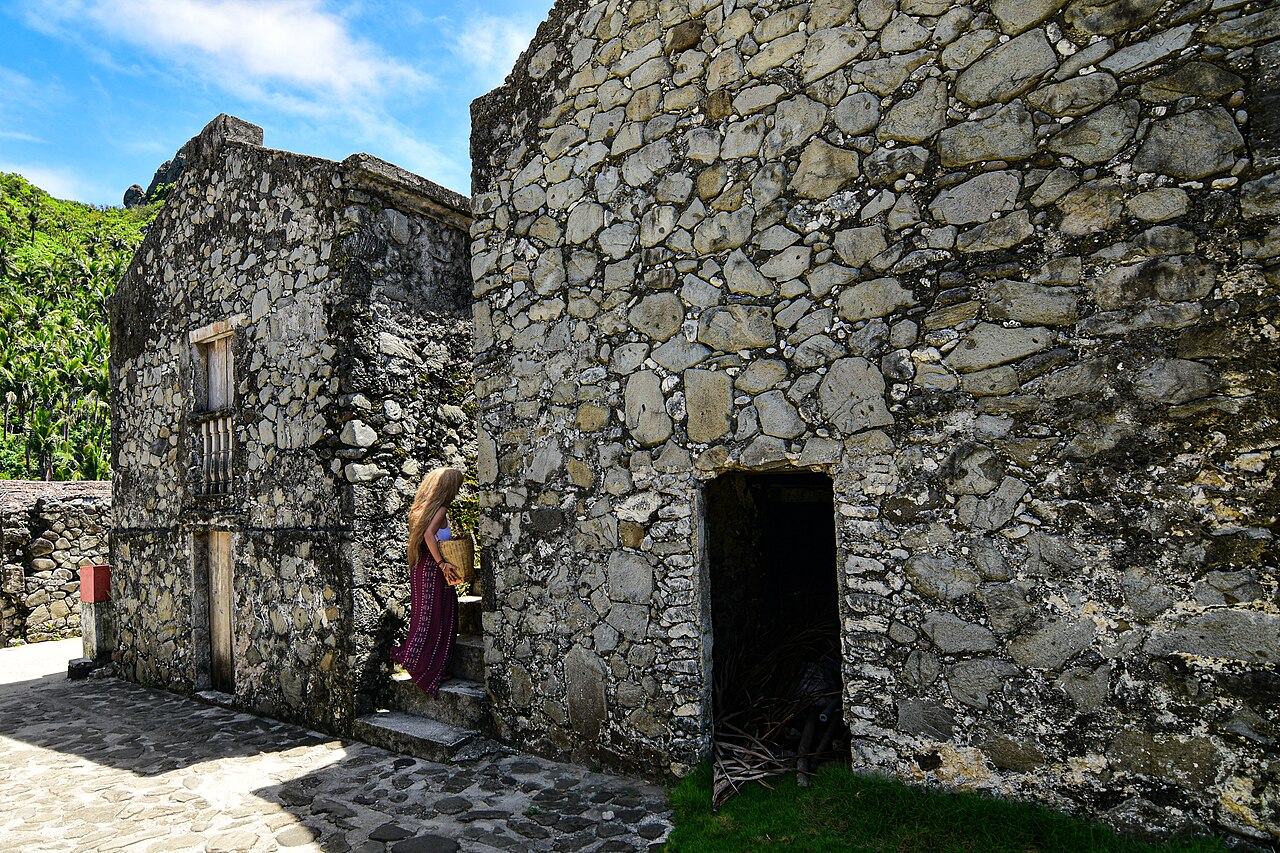
The island’s other great inheritance is Catholic, and it sits in Lazi. The San Isidro Labrador Church was built in the 19th century by the Augustinian Recollects, National Museum director Cecilio Salcedo said in 2012, when the museum formally presented its declaration of the church as a National Cultural Treasure. He called the complex one of the best preserved in the country, singled out its wooden floor as among the finest anywhere in the Philippines, and described the convent across the street as the largest in the Visayas. The restoration of the main retablo and two pulpits was funded with US$15,000 from the US Embassy. Salcedo added that any further renovation needs National Museum approval.
A 2025 feature from Negros Season of Culture dates construction of the church to 1884 and its completion to three years later. The walls are coral stone quarried from the surrounding reefs and bound with lime and sand, and the frame and floors are molave. The convent, completed in 1887 according to the same feature, now houses a heritage museum. The same feature says the church was meant partly to anchor the faith in a place where healing customs ran deep, so Lazi holds both sides of the island’s story within a few blocks.
Water, sand and an old tree
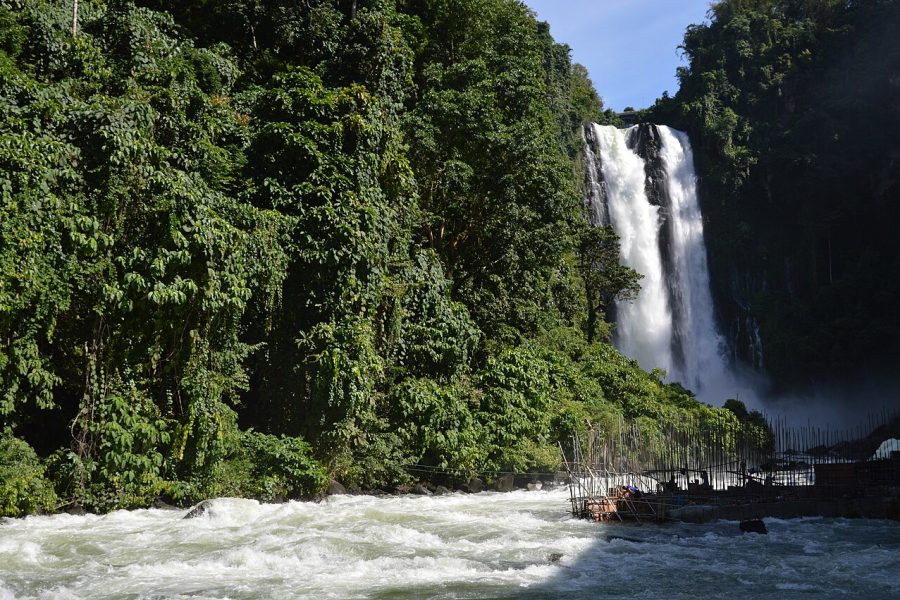
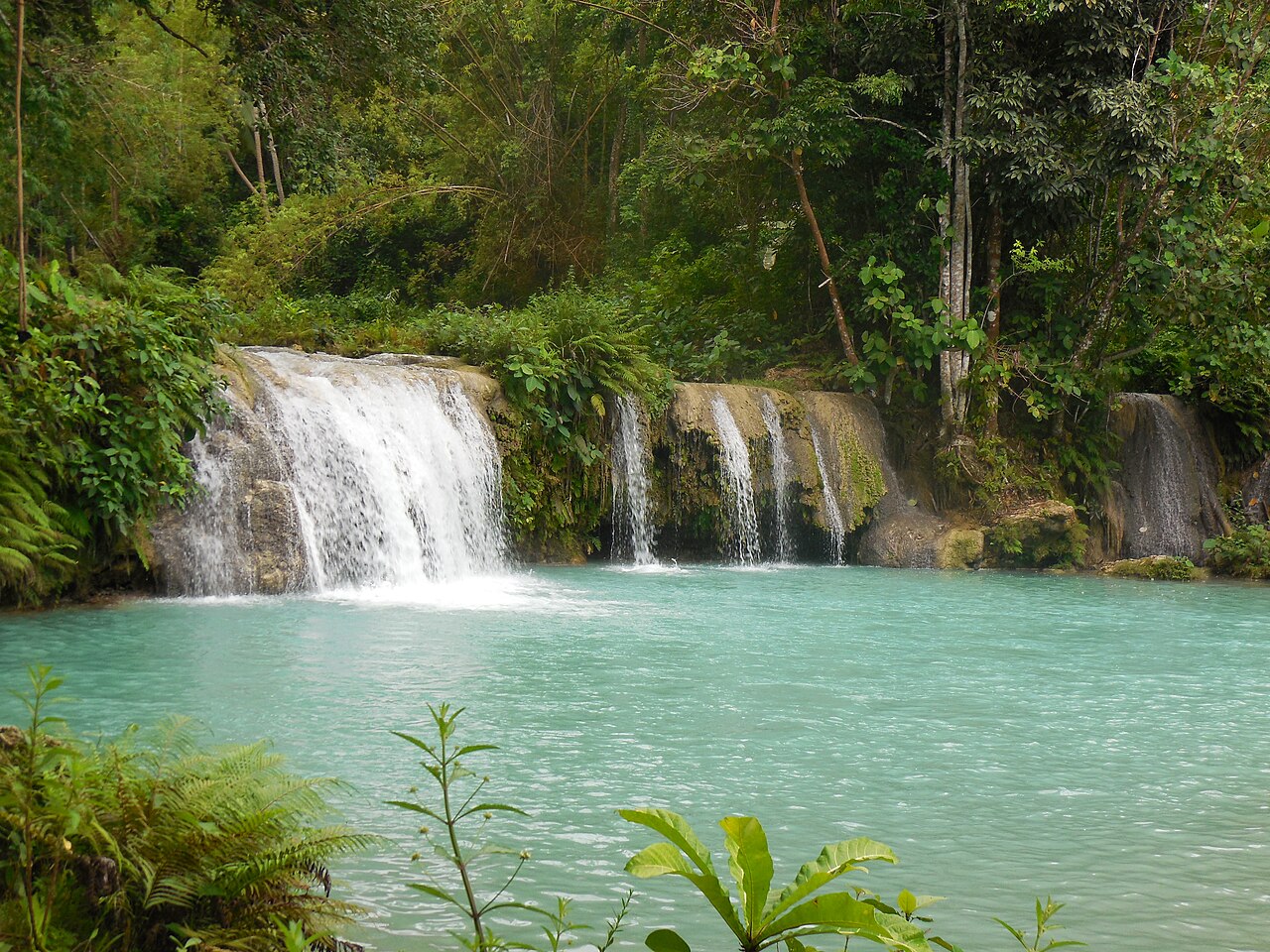
Lazi also has Cambugahay Falls, three tiers dropping into three turquoise pools before the water runs out to Lazi Bay, as the Inquirer described it in 2019. Check before you go. GMA Regional TV reported that the falls were closed to visitors after flooding on October 22, 2025, when the Gabayan River rose after two hours of heavy rain. We could not find a reopening notice, so confirm with the Lazi municipal government.
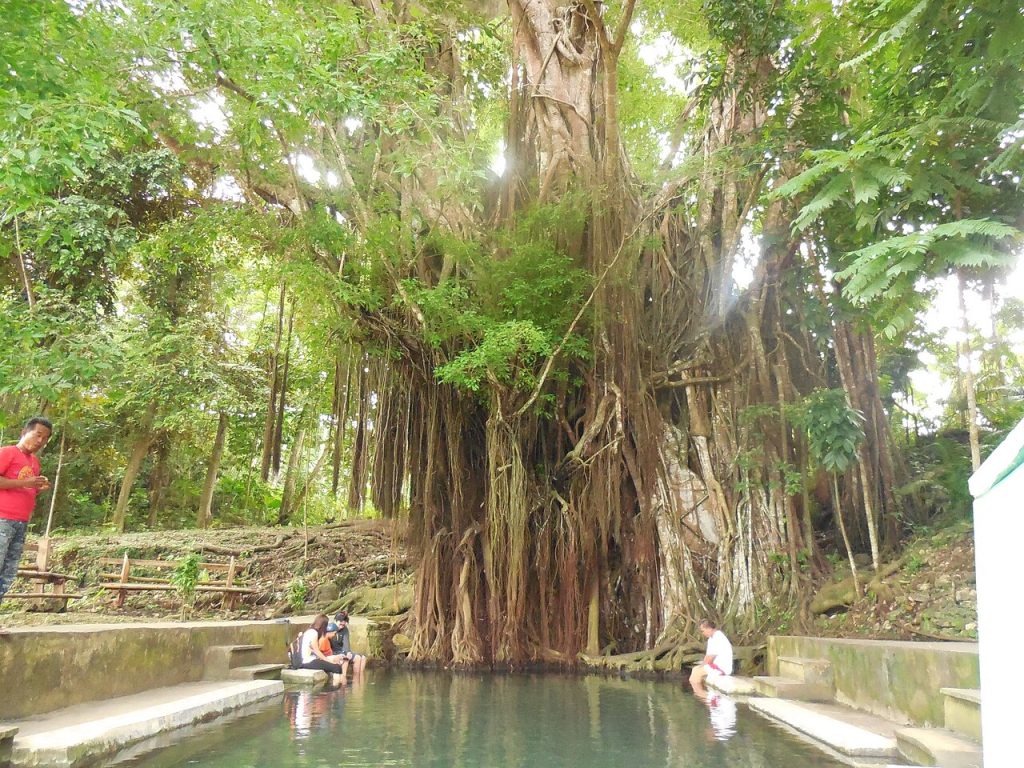
On the road through Barangay Campalanas stands what a 2023 Inquirer report lists among the island’s attractions as the Old Enchanted Balete Tree. The Inquirer’s 2019 feature put its age at around 400 years, a figure that is widely repeated but not, as far as we could find, scientifically dated. The same feature noted the doctor fish that nibble at visitors’ feet in the spring below, and the vendors selling potions and amulets nearby.
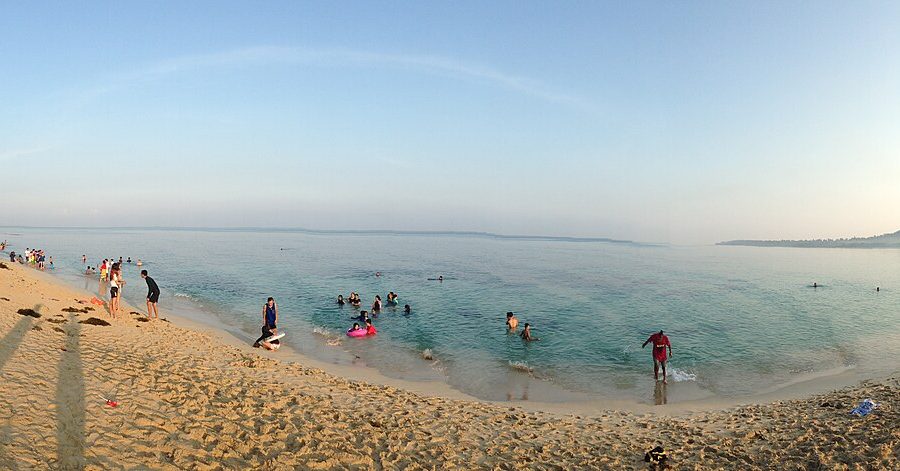
The beaches need no myth. In San Juan, Paliton public beach has fine white sand and a marine sanctuary, and is good for snorkeling, per the same Inquirer piece. Salagdoong in Maria has a rocky shore, calm clear water and jumping platforms of 7 and 10 meters. Dumanhog in Siquijor town keeps its white sand even at low tide.
A last word on manners. In 2012, The Freeman reported that in Barangay Cangmatnog, visitors could watch the Holy Week preparations but no interviews, cameras or videos were allowed. That is a fair rule for the whole island. The healers of Siquijor are not a show. Arrive as a guest, ask before photographing anyone, and you will see a working tradition rather than a spectacle.
Note: The founding year of the Healing Festival comes from a single Inquirer report (2006), and other accounts may give different dates. The construction dates for Lazi church and convent come from one cultural-promotion feature and were not checked against a National Museum or NHCP record. The balete tree’s 400-year age is a popular estimate, not a verified measurement. Cambugahay Falls’ status after its October 2025 closure is unconfirmed.
Sources
- Enchanting island of waterfalls, beaches — Leo Udtohan, Philippine Daily Inquirer, May 5, 2019
- The potions of Siquijor — Leo Udtohan, Philippine Daily Inquirer, April 9, 2017
- Siquijor’s healing festival no match for COVID-19 — Leo Udtohan, Philippine Daily Inquirer, April 9, 2020
- Siquijor to celebrate healing festival this Holy Week — Leo Udtohan, Inquirer Visayas, April 4, 2023
- Traditional healers in Philippines keep their ‘forest pharmacy’ standing — Keith Anthony Fabro, Mongabay, February 9, 2024
- In Siquijor, regaining healing powers while Christ is dead — Frank Cimatu, Rappler, April 14, 2017
- Healers, herbalists gather in Siquijor anew for healing festival — GMA Regional TV (Renan Ansing), GMA News Online, April 5, 2026
- Holy Week in Siquijor: Tourists flock to Folk Healing Festival — Renan Lapinig Ansing, The Freeman (Philstar.com), April 8, 2012
- Church in Siquijor declared nat’l treasure — Maricar Aranas, The Freeman (Philstar.com), May 18, 2012
- The Lazi Church and Convent: A National Cultural Treasure — Negros Season of Culture, November 24, 2025
- Cambugahay Falls in Lazi, Siquijor closed due to flooding — GMA Regional TV, GMA News Online, October 24, 2025