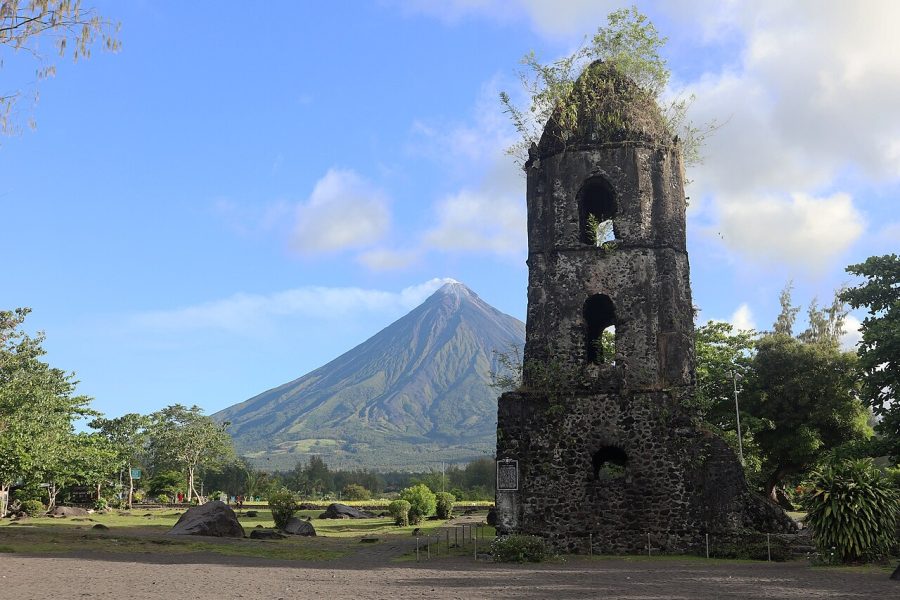
Taal is not where it started. The old town sat on the shore of Taal Lake, where the municipality of San Nicolas is now. It moved uphill after the volcano erupted massively in 1754. That is how the Philippine government tells it in the dossier it filed with UNESCO in 2024, which puts “the Historic Town of Taal” on the country’s tentative World Heritage list together with the volcano and its caldera lake. The same document says the eruption cut the lake off from the sea and turned it into fresh water, which is why the tawilis is a sardine that adapted to fresh water.
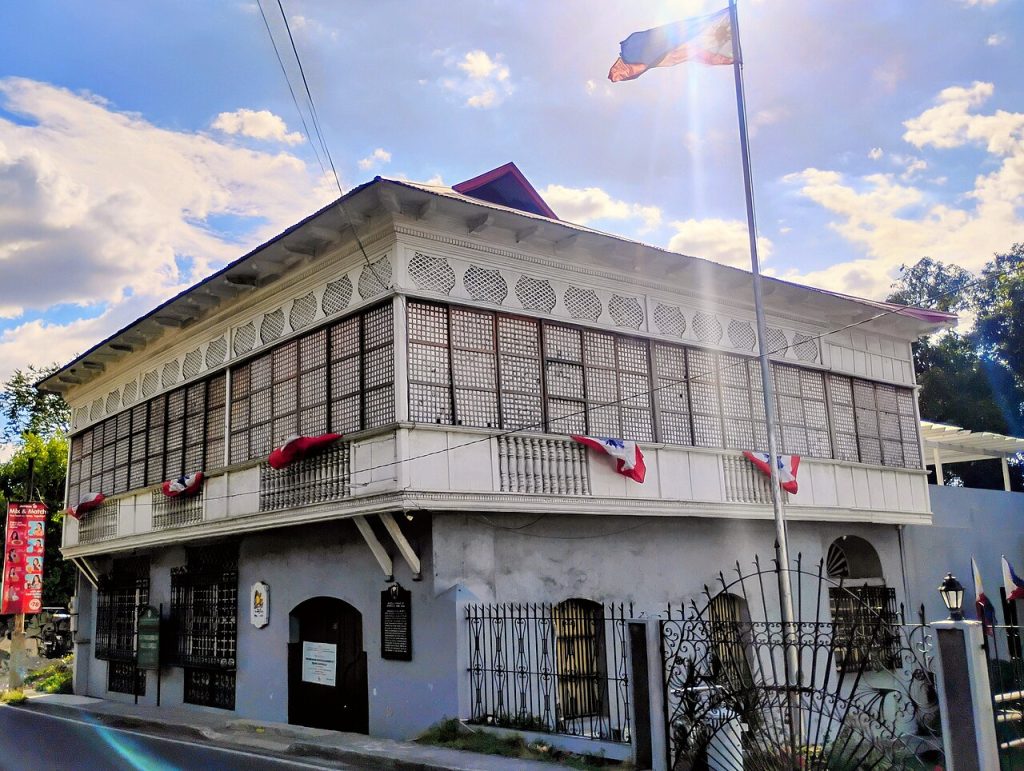
That history explains a lot about the town you walk through today. The rebuilt Taal grew rich on what the volcanic soil gave it: rice, sugar, cacao, coffee and cotton. That wealth still shows in the stone churches and the big bahay na bato of the town center. GMA Integrated News, in an April 2025 feature, put the number of heritage houses in town at more than 100.
Three houses, three family stories
The best-known address is the house of Marcela Mariño de Agoncillo, the woman who sewed the first Philippine flag. According to the Asia-Europe Foundation’s museum directory, her grandfather Don Andrés Mariño built the house around the 1780s, making it one of the earliest bahay na bato in Taal. Felipe Agoncillo, the first Filipino diplomat, moved in after marrying Marcela in 1889. On July 6, 1980, their surviving daughters Gregoria and Marcela Jr. donated the house, its furniture and family memorabilia to what was then the National Historical Institute. It reopened as the modernized Museo nina Marcela Mariño at Felipe Agoncillo on April 20, 2016, with seven galleries.
The flag itself was not made here. Christine Dayrit, writing in The Philippine Star in 2011, recounts that Agoncillo sewed it in Hong Kong, where the family lived in exile. Her five-year-old daughter Lorenza and Delfina Herbosa de Natividad, José Rizal’s niece, helped her, and the three finished it in five days. It was the flag raised in Kawit on June 12, 1898. Look for the small details inside the house too. GMA’s 2025 report points out a peephole in the floor that let the family see who was coming in, which is an old, low-tech version of a security camera.
A short walk away is the Museo nina Leon at Galicano Apacible. Leon Apacible was a lawyer and, in GMA’s description, the right hand of General Miguel Malvar. Dayrit notes the house was one of the places where revolutionaries met, and mentions an 1882 photograph of Leon with his classmate Rizal when both were art students. Inside you will find an ante sala and an aparador de tres lunas, a three-mirror wardrobe that GMA says takes 20 to 30 people to lift. Don’t confuse it with Galleria Taal, a separate museum of vintage cameras, which holds more than 200 of them according to GMA.
The third stop is really two houses. Tatler Asia’s 2023 guide says the Casa Regalo de Boda was Eulalio Villavicencio’s wedding gift to his wife, Gliceria Marella, built in 1872. It holds the first English translations of Noli Me Tangere and El Filibusterismo. Next to it, Casa Villavicencio served as a meeting place for Batangas’s revolutionary leaders, and Tatler notes that scenes of the TV series Maria Clara at Ibarra were shot there. Dayrit describes the gift house’s Art Nouveau interior and its hand-painted canvas walls.
The basilica and its big claim
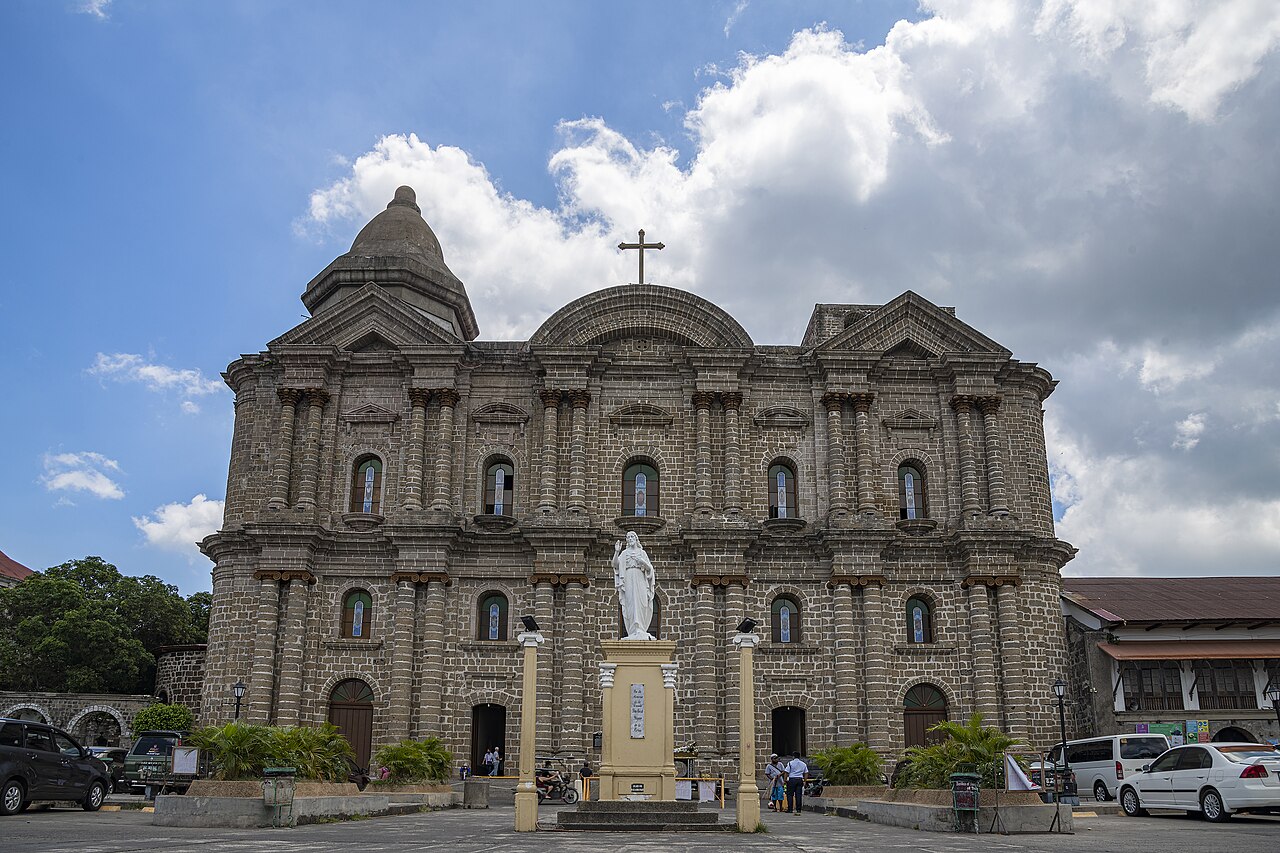
The Minor Basilica of St. Martin of Tours anchors the plaza, and almost every write-up calls it the largest Catholic church in Asia. The government’s own UNESCO submission uses that line. Tatler says it is “dubbed” the largest, and the heritage advocate Ivan Henares wrote in 2010 that it is “said to be” the biggest. None of the sources consulted for this piece gives a measurement or a comparison that settles the claim. It is better treated as a long-standing local title than as a proven record.
The legal status is clearer. Presidential Decree No. 375, signed on January 14, 1974, added “the 200-year-old Basilica of Taal” to the national shrines and landmarks under Presidential Decree No. 260. It also put the church’s preservation under the supervision of the National Historical Commission. According to Tatler, the present church dates to 1856, when Fr. Marcos Anton worked on it with the architect Luciano Oliver. From the Villavicencio houses, Henares notes, you can walk down the San Lorenzo Ruiz Steps to the Shrine of Our Lady of Caysasay. Tatler counts 125 granite steps. GMA describes the shrine as the only church in Luzon built of coral stone.
Needle and blade
Taal’s two famous crafts sit at opposite ends of the toolbox. Burdang Taal is hand embroidery, and its signature is calado. Yasmin Arquiza of GMANews.tv described it in 2009 as threads pulled vertically and horizontally from the cloth to form a square mesh. Mei Magsino of VERA Files reported in 2012 that the finest work traditionally came from the village of Iba. She also noted that the embroidery appears on jusi and piña as well as cotton, linen and ramie, and that Presidents Diosdado Macapagal and Ferdinand Marcos were often photographed in Taal-embroidered barong.
The same reports describe a craft in trouble. Magsino found machine-made pieces from Bulacan and work from Lumban, Laguna being sold under the Burdang Taal name. Many embroiderers had left to work overseas without passing the skill on. Arquiza met an embroiderer who sold a fully embroidered tablecloth for 12 for P7,000 in 2009, and it took four months to make. Those figures are more than a decade old, but the arithmetic still explains why hand embroidery struggles against machines.
The balisong, or fan knife, is the other half, and Arquiza notes it is traditionally men’s work in Taal. The place names tell you the trade: knives come mainly from Barangay Balisong and blacksmiths from Barangay Pandayan. VERA Files’ 2011 report breaks the work into specialists. The magtatalag builds the housing out of brass, aluminum or stainless steel. The magbabalakbak forges the blade from junk steel such as bearing housings and vehicle leaf springs. The magbabasyada puts the knife together. Handles come in horse bone, carabao horn, deer antler, narra and kamagong. Where the word comes from is less settled. The heritage conservationist Dindo Montenegro told GMANews.tv it joins bali, to break in two, with sungay, horn, after the deer horn once used on handles. That is one explanation, not a documented etymology.
What “heritage town” means on the ground
“Heritage Town of Batangas” is a nickname, but it comes with rules. GMA’s 2025 report says the town is covered by the Taal Heritage Preservation Code. Municipal tourism officer Atty. Maria Carlota Cerdeña explained that old structures cannot simply be torn down or have their look changed. The national layer is separate. Henares counted at least seven National Historical Landmarks in Taal in 2010, including the basilica, the municipal hall, Escuela Pia and the Agoncillo and Apacible houses. The UNESCO nomination is the newest layer and has not been decided.
For a visitor, the practical takeaway is that Taal is a working town, not an open-air museum. Henares wrote in 2010 that many of the houses could be entered only on organized walking tours, with entrance fees usually bundled into the tour price. Arrangements change, so check before you go. In the market, the town’s other heritage sits on a plate: GMA points to tapang Taal, sold alongside balisong and embroidered clothes. The El Pasubat festival celebrates the whole list. Dayrit explained that its name stands for panutsa, suman, balisong or barong, and tapa, tulingan or tawilis, and Tatler places it in April.
Note: The completion and consecration dates of the present basilica differ between secondary sources and could not be confirmed against a primary record, so they are left out. The “largest church in Asia” claim is reported here as a claim. No single law or proclamation formally naming Taal a “heritage town” was found. The status described above rests on the local preservation code, individual national landmark declarations and the pending UNESCO tentative listing. Museum hours, fees and walking-tour arrangements were not verified for this article.
Sources
- The Historic Towns and Landscape of Taal Volcano and its Caldera Lake (Tentative List) — UNESCO World Heritage Centre, submitted by the Permanent Delegation of the Philippines, 2024
- Presidential Decree No. 375 — Lawphil Project (text of decree), January 14, 1974
- Museo nina Marcela Mariño at Felipe Agoncillo, the Philippines — ASEF culture360 (Asia-Europe Foundation), undated
- 5 gems to explore in Taal, the Heritage Town of Batangas — GMA Integrated News, April 29, 2025
- Treasures of Taal — Christine S. Dayrit, The Philippine Star, January 30, 2011
- The cultural wanderer’s guide to Taal, Batangas — Gabriel Bohol, Tatler Asia, May 22, 2023
- Batangas: Taal heritage town walking tour — Ivan Henares, Ivan About Town, February 23, 2010
- From dainty to deadly: Taal’s arts and crafts — Yasmin Arquiza, GMANews.tv, December 4, 2009
- Taal embroidery now a dying craft — Mei Magsino, VERA Files, April 6, 2012
- The blade that defines the Batangueno — Mei Magsino, VERA Files, November 18, 2011