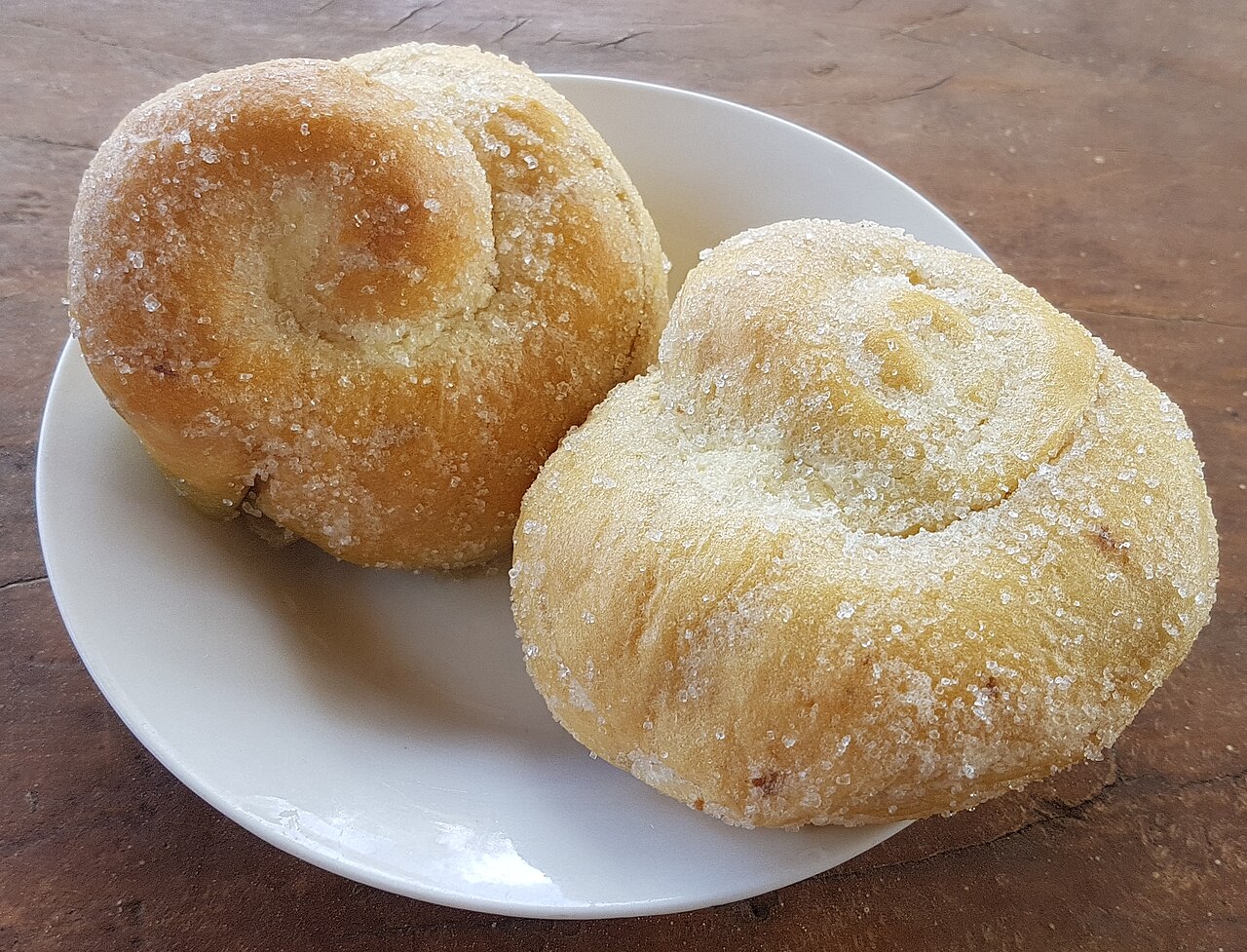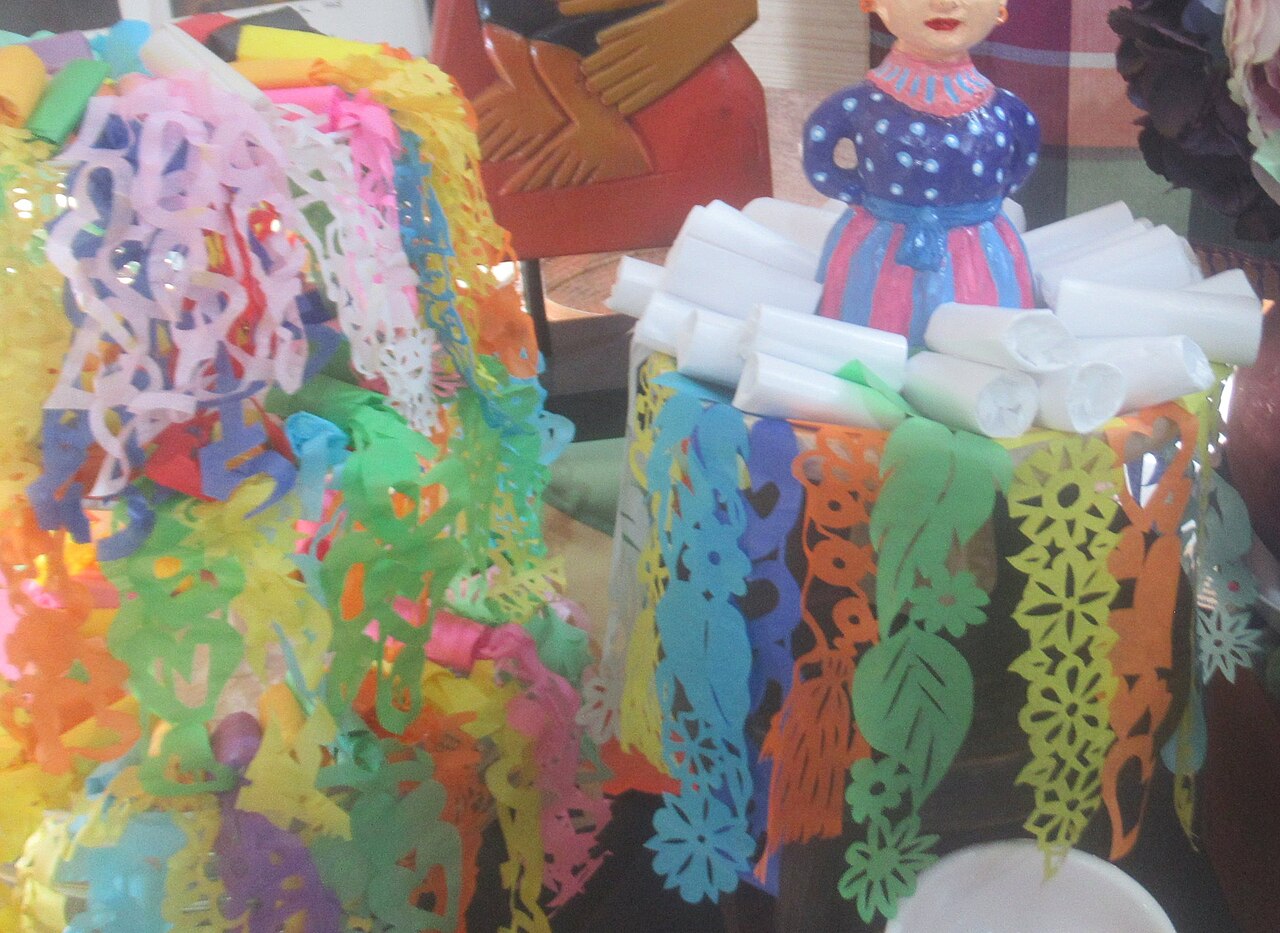
Most pasalubong gets judged by taste. San Miguel’s pastillas get judged by their tails first. Unwrap one of the town’s showier pieces and you are holding two things: a small log of carabao milk and sugar, and a strip of tissue-thin paper cut with a nipa hut, a woman in a Maria Clara gown, or a man pounding rice. The candy is the easy part. The wrapper is called pabalat, and it is the reason the town still gets written about.
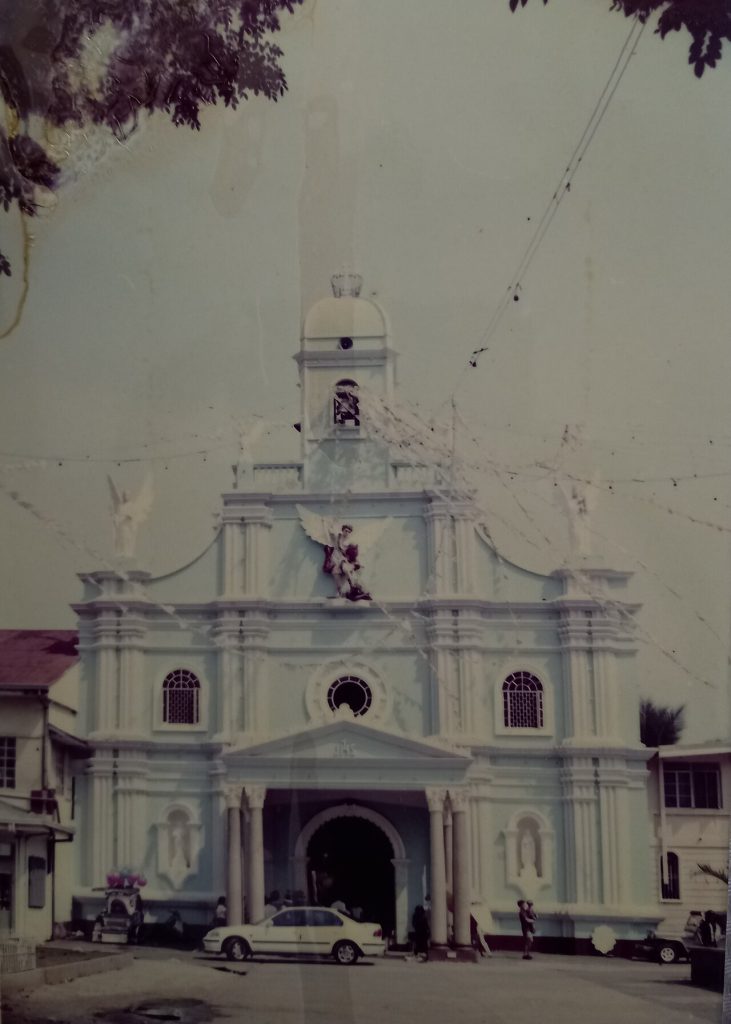
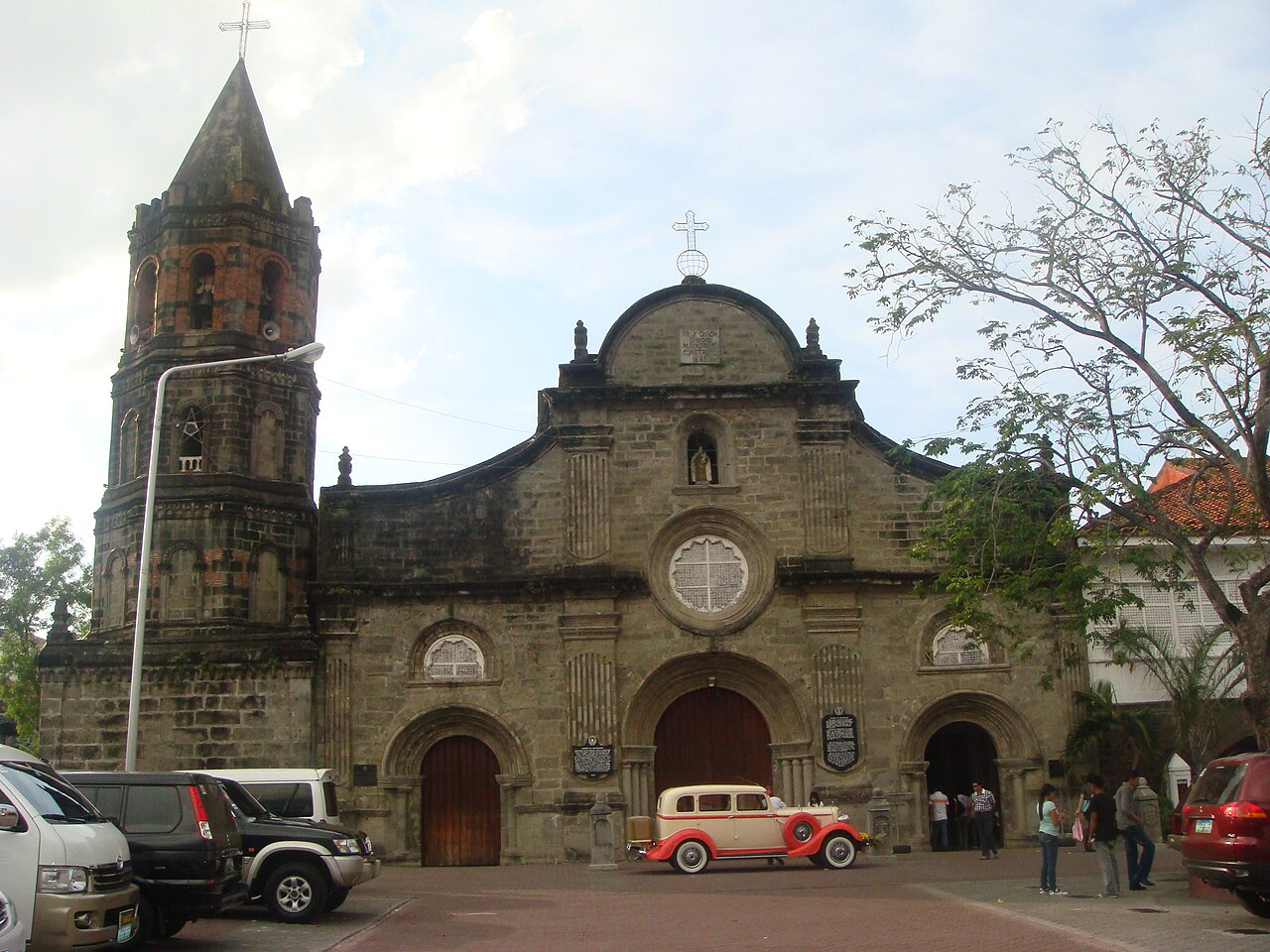
The old name of the town helps explain the sweet tooth. According to the Provincial Government of Bulacan, San Miguel was founded in 1763 and first named Miguel Mayumo, mayumo being a Pampango word for “sweet.” It later became San Miguel de Mayumo, and is now officially just San Miguel.
Skin for a sweet
Pabalat comes from the Tagalog balat, skin, Rappler explained in a 2021 feature. The craft is also known as borlas de pastillas, “tassels of pastillas.” The paper is papel de japon (locally, papel de hapon), a delicate, brightly coloured Japanese paper. The candy sits in a small plain section of the strip. The long ends are where the art happens.
The format is fairly standard. The Inquirer described the wrapper as a 2 x 10-inch strip in 2015. A set is five pieces. Designs range from the stock motifs of a Bulakeño fiesta table to commissioned work: customers routinely ask for their names cut into the paper, and the Philippine Star’s 2008 profile lists greetings like “Mabuhay,” “Maligayang Pasko” and “Happy Birthday” among the patterns, along with long-tailed adarna birds and tinikling dancers.
Why wrap a milk candy in lace at all? Joy Marie Joaquin, who runs the San Miguel shop Borlas de Mayumo, gave Vogue Philippines in May 2026 two reasons she credits to historian Dez Bautista: the wrapper keeps fingers from getting oily while eating, and it makes the dessert look festive on the table. Practical first, then pretty. That is a very Filipino order of priorities.
Where it came from depends on who you ask
Nobody has pinned down the origin, and the sources don’t agree. Rappler called it “quite vague.” When the Philippine Star’s Catherine Jones asked the best-known cutter of the last century where pabalat came from, the answer was “Probably China, but no one is sure.” Jones floated two possibilities herself: Chinese paper-cutting brought over during the Manila-Acapulco galleon trade, or a cousin of Mexico’s papel picado, the perforated paper bunting hung on churches. Neither was documented in her piece.
Vogue Philippines, writing in 2026, goes further. It says the craft dates to the Spanish period, grew out of Chinese settlement in San Miguel, originally used Chinese paper, and switched to Japanese paper during the Japanese occupation. The article doesn’t name a primary source for that account, so treat it as one version of the story, not a settled history. An academic study by Patricia Gonzalez in the Ateneo de Manila journal Social Transformations (2017) traces the history of borlas de pastillas and raises questions of “disinheritance, dissonance, memory, and ownership,” which suggests the past is contested even among people who study it.
The woman the town called Aling Nene
Any account of pabalat ends up at Luz Ocampo. The Inquirer’s Ron Lopez reported in 2015 that she learned the craft at 12, in fifth grade, when pabalat-making was still part of the school curriculum, and sharpened it helping her mother, Adelaida Villaseñor, who was known for pastillas and other sweets in their village of San Vicente. World War II ended her schooling in her last year of high school. After the war she opened a gift shop in San Miguel. Only after her husband Oscar died in the 1970s did cutting become her full-time living, supporting four children.
The numbers in that report give a sense of scale. She cut at least 100 wrappers a day and sold them for 20 centavos in the 1950s. Over her career she created more than 50 designs, mostly drawn from rural San Miguel, and her daughter said at least 25 were patented in her name. Her favourites were Maria Clara, the bahay kubo and the rice pounder. She moved to Malolos in 1993 to live with her daughter, and her wrappers became known across the province from there.
She cut for Malacañang functions, including the 2012 state visit of Spain’s Queen Sofia, according to the Inquirer. She told the Philippine Star that Imelda Marcos had ordered pastillas from her for all her dinners. The Inquirer also lists recognition from the National Historical Commission of the Philippines (the Gawad Pamanang Sining) and the provincial Dangal ng Lipi award in 2015, and reports that the Cultural Center of the Philippines honoured her as one of the country’s “Manlilikha.” She died in 2016, at 93 according to Rappler.
Her method, as she described it to the Philippine Star in 2008: “First you take your paper and fold it in half, then fold it again. Then you take a stencil, whatever pattern you want, and trace it on the rectangle, then you cut, starting with the interior patterns and moving to the edges.” Her tool was a pair of cuticle scissors. The hardest parts, she said, were the tiny circles at the centre of flowers and the folds on Spanish dresses. A set of five took her 10 to 15 minutes.
Stencil in San Miguel, freehand in Malolos
Bulacan doesn’t cut pabalat one way. “In San Miguel we use a stencil,” Ocampo said in 2008. “The Malolos style does not, which is much harder.” Eighteen years later Joaquin described the same split to Vogue Philippines: San Miguel artisans follow a pattern, Malolos cutters work freestyle. Her shop adds a small modern trick. The traced paper is stapled at the edges so the layers don’t shift during cutting, a technique Joaquin credits to Lita Libunao, whom she describes as one of the oldest makers in the province.
Prices have moved slowly for so much handwork. Ocampo’s family charged P600 per 100 pieces for basic designs and P1,000 for custom ones in 2015, per the Inquirer, and Rappler reported the same rates in 2021, with wrapped pastillas at around P15 to P20 apiece.
Who will cut the next ones?
San Miguel staged its first Pastillas Festival on May 5 to 7, 2006. In an essay for Artes de las Filipinas, Sherwin Mapanoo quotes then-mayor Edmundo Jose Buencamino calling pastillas “a source of pride and a unifying symbol” for the town. Mapanoo’s point was that the candy industry was surviving while the paper craft was not. At the time he wrote, most pabalat makers in San Miguel were in their 70s or 80s, and some had moved to Malolos to run more lucrative sweets businesses.
The succession problem is personal in the Ocampo family. Her daughter, Naty Ocampo-Castro, took up the craft only after retiring as an industrial engineer in 2010. “I was not interested when I was younger, but my mother said no one will take care of the business,” she told the Inquirer. Of the women her mother trained, she said, “no one wants to do it because it is tedious and hard.”
The picture in 2026 is less bleak than “dying art” suggests, if not exactly secure. Researcher Hannah Adorna, quoted in Vogue Philippines, blames the decline on the craft’s absence from formal curricula and thin documentation. That is notable, given that Ocampo learned it in a classroom. But Adorna’s most surprising finding was that pabalat is still being revived through workshops, tourism programs and social media. A wrapper that began, by one account, as a way to keep fingers clean now owes part of its survival to how well it photographs. That is not the worst fate for a folk art.
Note: The origin of pabalat is undocumented in the sources consulted. The Chinese, Mexican and Japanese-occupation accounts above are attributed claims, not established history. The Inquirer’s reference to Luz Ocampo being honoured as a CCP “Manlilikha” could not be matched to a specific award, and should not be confused with the national Gawad sa Manlilikha ng Bayan. Published ages for Ocampo don’t line up exactly across sources (85 in 2008, 93 in 2015, and 93 at her death in 2016).
Sources
- ‘Pabalat:’ In Bulacan, pastillas wrappers are a labor of love — Rappler (Paolo Alejandrino), July 9, 2021
- Meet the real ‘Pastillas (Wrapper) Girl’ — Philippine Daily Inquirer (Ron Lopez), November 5, 2015
- The Matriarch of Pabalat: Nene Scissorhands — The Philippine Star, Starweek Magazine (Catherine Jones), May 11, 2008
- What Is Borlas de Pastillas, and How Are Bulakeños Keeping It Alive? — Vogue Philippines (Hyacinth Aranda), May 21, 2026
- The Pastillas Paper Cut Tradition — Artes de las Filipinas (Sherwin Mapanoo), undated
- Safeguarding Pabalat-Wrapped Pastillas in the Philippines: Problems and Possibilities of Community Participation — Social Transformations Journal of the Global South, Ateneo de Manila University (Patricia Gonzalez), 2017 (abstract)
- San Miguel — Provincial Government of Bulacan, undated